
How Dubai Turns Seawater into Drinking Water for Millions of Residents
Meta Description: How Dubai filters and desalinates huge volumes of Gulf seawater and delivers it to residents: Jebel Ali, Hassyan, thermal and reverse osmosis desalination, storage, and your building tank.
Target Keyword: How Dubai Desalinates Seawater Secondary Keywords: dubai desalination plants, jebel ali desalination, how dubai gets drinking water, dubai water supply, seawater reverse osmosis dubai
Dubai sits on a desert coast with almost no natural fresh water, yet its taps run all day. The answer is desalination: taking seawater from the Arabian Gulf, removing the salt, and sending the result through a city-wide network. Residents do not receive seawater. They receive desalinated and treated water. Here is how the system works, how big it is, and what happens in the last stretch that you control, your building's storage tank.
Why Dubai Depends on Desalination
The UAE has very little rainfall and limited groundwater, so a large share of drinking water comes from the sea. Dubai Electricity and Water Authority (DEWA) runs the emirate's main desalination capacity, and much of it is concentrated at the Jebel Ali complex on the coast south-west of the city.
How Big Is the Operation?
Figures published by DEWA in recent years give a sense of the scale:
- Jebel Ali has been reported at a total desalination capacity of 490 million imperial gallons per day (MIGD). One imperial gallon is about 4.55 litres, so that is roughly 2.2 billion litres of water every day.
- That total is made up of 43 thermal multi-stage flash (MSF) units with a combined capacity of 427 MIGD, plus two seawater reverse osmosis (SWRO) plants with a combined 63 MIGD.
- Hassyan, a large new seawater reverse osmosis plant, is designed for 180 MIGD and is being ramped up, with DEWA scheduling all phases for completion in early 2027.
- DEWA has stated a goal of raising the SWRO share of its production substantially by 2030, as it moves toward more energy-efficient membrane technology.
These are published project and capacity figures, dating from different years. Current output varies with demand and plant availability, so treat them as indicators of scale rather than live numbers.
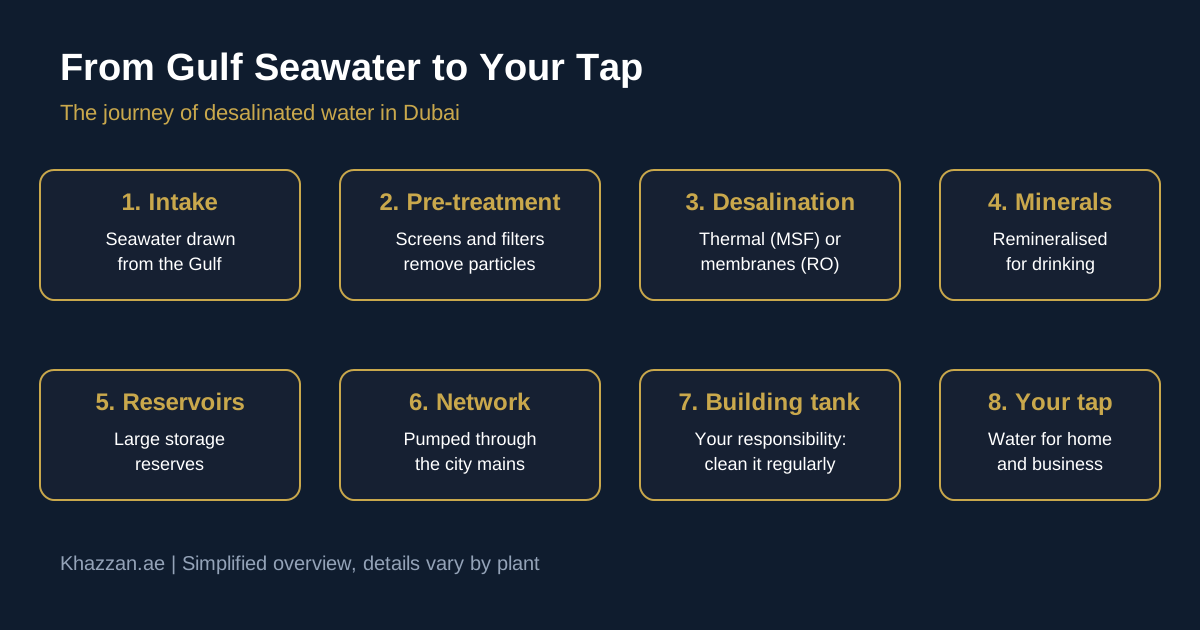
Step by Step: From Seawater to Drinking Water
1. Intake
Seawater is drawn from the Gulf through intake structures that reach well offshore. At Jebel Ali's SWRO plant, for example, the intake pipe runs well over a kilometre out to sea, with a separate outfall pipe returning concentrated brine further away.
2. Pre-treatment
Raw seawater carries sand, silt, algae, and other particles. Screens and filters remove these first, because suspended solids would foul the membranes and equipment that come next. This is the same principle as the sediment stage in a home filter system.
3. Desalination
Two technologies do the heavy lifting:
- Multi-stage flash (MSF), thermal. Heated seawater passes through a series of chambers at progressively lower pressure. In each chamber part of the water flashes into vapour, which is condensed into fresh water. Thermal plants have historically been paired with power generation, using heat that would otherwise be wasted.
- Seawater reverse osmosis (SWRO), membrane. High-pressure pumps push seawater through semi-permeable membranes that hold back the salt and let fresh water through. It uses less energy than thermal distillation, and modern plants recover energy from the pressurised brine to cut power use further. Many plants run two RO passes to reach the required quality.
4. Post-treatment and remineralisation
Water that has come through desalination is very pure and lacks the minerals that make it taste right and protect pipes. It is remineralised and treated so that it is stable, safe, and pleasant to drink before it enters the network. The concentrated brine left over is treated and discharged back to the sea in a controlled way.
5. Storage
Desalinated water is held in large reservoirs, which act as the city's buffer against demand peaks and supply interruptions. DEWA has been adding reservoir capacity, and has developed underground storage to build a strategic reserve for emergencies.
6. Distribution
From the reservoirs, pumps move water through a large network of transmission and distribution mains. The network is monitored around the clock, and DEWA reports very low network losses compared with many large cities.
The Last Stretch: Your Building's Tank
Public supply stops at your property line. From there the water goes into your building's storage tank, usually a rooftop or ground tank, and then down to the taps. This final stretch is the part you control, and it is where water quality can change:
- A tank that is old, uncovered, or in direct sun can pick up sediment and encourage algae.
- A tank that is never cleaned can undermine the quality of water that left the plant in good condition.
- Pipes and fittings add their own contribution to taste and sediment.
That is why Dubai Municipality and Abu Dhabi Municipality both require potable water tanks to be cleaned and disinfected at least every 6 months. Our water tank cleaning service handles villas and commercial buildings, and our UAE Municipality certified tanks are built with food-grade, UV-stabilised materials. If you also want filtration at the tap, read our complete guide to water filtration systems.
Frequently Asked Questions
Q: Is the water in Dubai seawater? A: No. It starts as seawater but is desalinated, remineralised, and treated before it enters the network. Residents receive treated drinking water, not seawater.
Q: How does Dubai desalinate seawater? A: Using two main technologies: thermal multi-stage flash distillation and seawater reverse osmosis. Both remove salt and dissolved solids, and the water is then remineralised and treated.
Q: What is the difference between MSF and reverse osmosis desalination? A: MSF heats seawater and condenses the vapour that flashes off, so it is a thermal process. Reverse osmosis uses high pressure to push seawater through membranes that block the salt. Reverse osmosis generally uses less energy.
Q: Where does Dubai's desalinated water come from? A: Mainly from the Jebel Ali power and desalination complex, with the new Hassyan reverse osmosis plant adding capacity as it is brought into operation.
Q: How much desalinated water does Dubai produce? A: Jebel Ali has been reported at around 490 million imperial gallons per day, roughly 2.2 billion litres, with more capacity being added at Hassyan. Figures change as plants are expanded and upgraded.
Q: What happens to the salt removed from seawater? A: The concentrated brine is treated and returned to the sea through a dedicated outfall, away from the intake.
Q: Is desalinated water safe to drink? A: Yes, after remineralisation and treatment. The remaining risk is in the last stretch, the building tank and pipes, which is why regular tank cleaning matters.
Q: Why does tap water sometimes taste of chlorine? A: Chlorine is used to keep water safe as it travels through the network and storage. A carbon filter at the tap reduces the taste. See our filtration guide.
Q: Do I still need to clean my water tank if the supply is treated? A: Yes. Treated supply can still pick up sediment and growth in a building tank, and Dubai and Abu Dhabi Municipality require cleaning and disinfection at least every 6 months.
Q: How much storage does Dubai keep in reserve? A: DEWA operates large reservoirs and has been expanding them, and it has developed underground storage as an emergency reserve. Exact capacity changes as new facilities come online.
Related Resources
- Complete Guide to Water Filtration Systems in the UAE
- Water Tank Cleaning UAE
- UAE Municipality Water Tank Requirements
- Water Tank Size Calculator
- Buy Water Tank UAE, Khazzan.ae
Source material: DEWA announcements and project pages on Jebel Ali and the Hassyan seawater reverse osmosis project, and desalination technical literature.
📞 Call or WhatsApp: +971509583173 🌐 khazzan.ae 📍 Al Qouz Industrial Area 3, Dubai, UAE 🕐 Monday to Saturday, 8AM to 7PM