
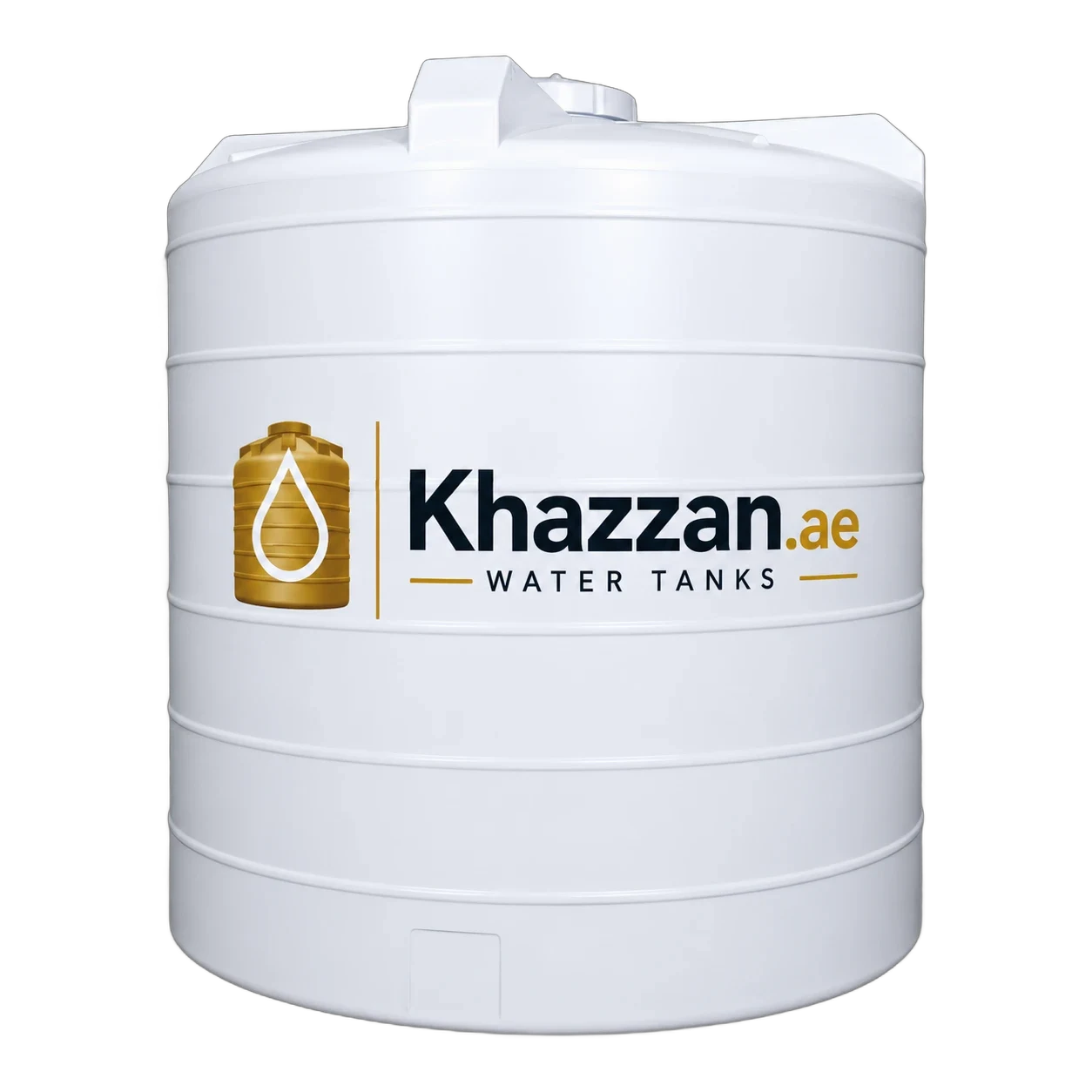
Water Tank Cleaning & Maintenance in the UAE: A Practical Guide (2025)
Meta Description: How to clean and maintain a water tank in the UAE — cleaning frequency, the actual step-by-step process, professional service costs, and what regulations expect.
Target Keyword: Water Tank Cleaning UAE Secondary Keywords: water tank cleaning Dubai, how to clean water tank UAE, water tank maintenance UAE, tank disinfection Dubai, water tank service UAE
Most people in the UAE don't think about their water tank at all until something's clearly wrong — the water starts tasting odd, there's an unfamiliar smell coming from the taps, or worse, someone in the house gets sick and the tank turns out to be the source once you look into it.
In this climate, water tank hygiene isn't something you can afford to put off. Temperatures inside an unshaded tank can climb high enough in summer to speed up bacterial growth significantly. Sediment builds up faster here than in cooler countries. And if your inlet float valve has been letting in a slow trickle of lower-quality water, months can pass before it becomes obvious.
The good news is that regular maintenance is genuinely simple and cheap, and it keeps your water safe year-round. Here's what to do, and how often.
How Often Does a Water Tank Actually Need Cleaning?
UAE health authorities and municipality guidance recommend cleaning residential tanks at least once every 6 to 12 months. In practice, the right frequency for you depends on a few things:
Clean every 6 months if:
- The tank sits outdoors in direct sunlight
- It's an older tank (10+ years) with a rougher interior surface
- You've had water quality problems before
- Your area has a history of supply quality fluctuations
Once a year is usually enough if:
- The tank is shaded or in an enclosed plant room
- It's relatively new, with a smooth interior surface
- Local water quality has been consistently good
Commercial and institutional tanks — hotels, hospitals, labour camps, schools — need cleaning every three to six months. Higher user volumes and the regulatory requirements that come with them both push toward more frequent maintenance.
Signs You Shouldn't Wait for the Scheduled Clean
Act immediately if you notice any of these:
- Unusual taste or smell — earthy, musty, or chemical notes from the tap
- Discoloured water — yellow, brown, or cloudy, especially first thing in the morning
- Visible sediment — debris or discolouration you can actually see in the tank
- Algae or slime — green or brown growth on the walls or fittings, particularly in tanks that get any daylight
- Illness — gastrointestinal symptoms hitting multiple household members with no other obvious explanation
Any of these means clean now, not on the next scheduled date.
Cleaning It Yourself: The Full Process
A standard rooftop or ground-level domestic tank is something most homeowners can handle with the right equipment and a spare afternoon. Here's the complete process.
What you'll need:
- Rubber gloves and eye protection
- A stiff-bristled scrubbing brush (long handle for larger tanks)
- A high-pressure hose or jet washer, if you have one
- Household bleach (sodium hypochlorite, 5% concentration or cleaning-grade)
- A plastic bucket
- A wet/dry vacuum or pump for the last of the water
Step 1: Isolate and Drain
Shut off the inlet valve to stop supply. Open the outlet or drain point and let the tank empty as far as it will go. If there's no proper drain, a submersible pump handles the final 20–30 centimetres.
Step 2: Scrub Every Surface
Scrub walls, floor, the area around inlet and outlet connections, and around the manhole collar. Pay particular attention to corners and any rough or textured surfaces, where biofilm tends to accumulate. Avoid wire brushes or abrasive pads on plastic or GRP — they'll scratch the surface and make future cleaning harder.
Step 3: Rinse It Out
Rinse thoroughly with a strong jet of clean water, clearing out all the dislodged sediment and debris. Keep going until the runoff comes out clear.
Step 4: Disinfect With Chlorine
Mix a chlorine solution at roughly 50 parts per million (ppm) — about 100ml of standard household bleach per 1,000 litres of tank volume. Fill to the normal operating level with this solution and let it sit for a minimum of 30 minutes (an hour is better).
For tanks that are severely contaminated or haven't been cleaned in years, use a stronger initial solution (200 ppm) and extend the contact time.
Step 5: Final Rinse
Drain the disinfectant fully. Refill with clean supply water and drain again — repeat once more. The goal is removing every trace of the chlorine solution before the tank goes back into service. If you can still smell strong chlorine from the tap after refilling, flush it through again.
Step 6: Refill and Check
Refill normally, then confirm the inlet float valve is working correctly — it should stop the water at the right level and seal completely. Replace it if it's trickling.
When to Call a Professional Instead
For large tanks, tanks that are hard to access, or commercial applications, a professional cleaning service is worth the cost. That typically includes:
- Full drainage by pump-out
- High-pressure jet washing of every interior surface
- Disinfection with certified chlorine solution
- Water quality testing (residual chlorine, turbidity, bacteria count)
- A written maintenance report for regulatory compliance
- Inspection of fittings, valves, and structural condition
Dubai in particular requires commercial properties to keep water tank cleaning records on file. A professional service provides exactly the documentation needed for a compliance inspection.
Typical Dubai and Abu Dhabi pricing for professional cleaning:
- Small residential tank (up to 500 USG): AED 200 – 500
- Medium tank (500–2,000 USG): AED 400 – 800
- Large commercial tank: AED 800 – 3,000+, depending on size and access
The Float Valve: The Job Everyone Forgets
If there's one maintenance item responsible for more problems than anything else in UAE water tanks, it's the inlet float valve. A faulty float that doesn't seal properly lets water trickle in continuously — which creates ideal conditions for biofilm and cuts down the residence time your stored water needs to actually reach effective disinfection contact time.
A float stuck in the closed position means the tank never refills properly, and you risk running dry.
Check it every six months: shut off the main supply and watch whether the water level in the tank rises anyway — that indicates a leaking float valve. If it does, replace it; they're inexpensive and simple to swap out.
GRP Tanks: What's Different in Maintenance Terms
GRP fiberglass tanks follow the same basic cleaning routine as plastic, but inspection should also watch for:
Delamination — if the surface layer starts to separate, showing as bubbling or lifting of the inner gel coat, get a GRP specialist to assess it. Caught early, it's repairable. Left alone, it can progress to structural failure.
Fitting corrosion — GRP tanks often use brass or stainless steel fittings. Check these for corrosion, especially in coastal locations, and replace anything showing signs before it fails.
Joint integrity — for large sectional GRP tanks, inspect the joints between panels annually. Any weeping or moisture around a joint needs attention right away.
Underground Tanks Need Attention Too
Underground tanks are out of sight, and unfortunately often out of mind — but they need the same regular maintenance as anything above ground.
Access: keep manhole covers accessible and clear of landscaping or paving. Losing the access point makes re-establishing it expensive.
Dewatering caution: in parts of the UAE with a high groundwater table, an empty underground tank can actually float — the buoyancy of the empty shell can push it out of the ground if hydrostatic pressure is high enough. Never empty an underground tank without first understanding local groundwater conditions.
Atmosphere testing: underground tanks sealed for a period can develop oxygen-deficient or toxic atmospheres. Follow confined-space procedures for any entry, inspection, or cleaning.
Frequently Asked Questions
Q: Is water tank cleaning legally required in Dubai? A: Dubai Municipality and other UAE authorities have regulations requiring tanks to be kept clean and maintained. Commercial properties are subject to inspection; residential compliance is strongly encouraged for health reasons.
Q: Can I clean my tank with vinegar instead of chlorine? A: Diluted white vinegar helps with light mineral scale, but it isn't an effective disinfectant on its own. Always follow it with a proper chlorine disinfection step.
Q: How do I disinfect a brand-new tank before first use? A: Rinse out any manufacturing residue — this matters especially for GRP — then fill with a 50 ppm chlorine solution, leave for an hour, drain, rinse twice, and fill for use.
Q: My water smells of chlorine after cleaning — is that a problem? A: A faint chlorine smell in tap water is normal and comes from the municipal supply. If it's strong right after a clean, the tank wasn't flushed enough post-disinfection — drain and refill again.
Q: Is Ramadan a good time to clean a residential tank? A: Actually ideal — water usage drops significantly, which makes it much easier to drain the tank fully. Otherwise, the process is exactly the same.
Keeping a water tank clean in the UAE isn't optional housekeeping — it's the line between safe water and a genuine health hazard. If you're overdue for a clean-up or need advice on a maintenance schedule, reach out to Khazzan.ae.
Related Resources
- Water Tank UAE — Complete Buyer's Guide
- Water Tank Sizes UAE — Full Size Guide
- Water Tank Price Dubai & UAE 2025
- Water Tank Size Calculator UAE
- Buy Water Tank UAE — Khazzan.ae
📞 Call or WhatsApp: +971509583173 🌐 khazzan.ae 📍 Al Qouz Industrial Area 3, Dubai, UAE 🕐 Monday to Saturday, 8AM – 7PM