
Complete Guide to Water Filtration Systems in the UAE
Meta Description: A complete guide to water filtration systems for UAE homes and buildings: filter types, how each stage works, whole-house vs under-sink, and how storage tanks affect water quality.
Target Keyword: Water Filtration Systems UAE Secondary Keywords: water filter system uae, whole house water filter dubai, reverse osmosis uae, home water filtration, water filter for tank
Water in the UAE is treated before it reaches your building, but what comes out of your tap depends on more than the treatment plant. It also depends on your storage tank, your pipework, and the age of both. A water filtration system is how you deal with whatever is left: chlorine taste, sediment, scale, or bacteria picked up along the way. This guide explains the main filter types, what each one actually removes, and how to choose without overbuying.
Where Water Quality Problems Come From
Most problems fall into four groups:
- Sediment. Sand, silt, rust flakes, and scale that settle in tanks and pipes and then travel to your taps.
- Taste and odour. Chlorine used in public supply, plus smells from stagnant water or algae in a tank.
- Hardness. Dissolved minerals that leave limescale on tiles, taps, kettles, and water heaters.
- Biological growth. Bacteria and algae in tanks that are not cleaned or covered properly.
A filter solves the first three well. The fourth is mainly a tank maintenance problem, which is covered further down.
The Main Types of Filtration
Sediment Filters
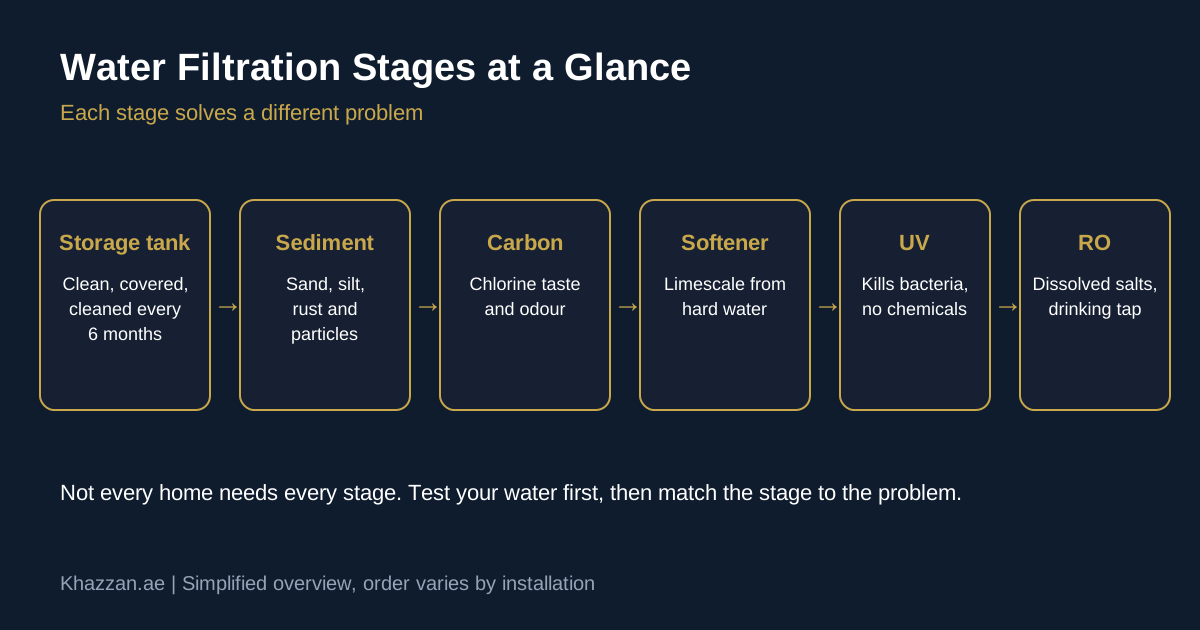
A sediment filter is a physical screen that traps particles. It is usually the first stage, because it protects every filter after it from clogging. If you see sand, grit, or brown flecks in your water, this is the stage that deals with it.
Activated Carbon Filters
Activated carbon reduces chlorine, odours, and many taste problems. It is the stage most people notice, because water simply tastes better afterwards. Carbon also protects reverse osmosis membranes from chlorine damage.
Reverse Osmosis (RO)
An RO membrane removes a large share of dissolved solids, including salts and many heavy metals. It is mostly used as an under-sink unit with its own drinking tap. The trade-offs are that it wastes some water during operation and it also removes beneficial minerals, so many systems add a remineralisation stage afterwards.
Ultraviolet (UV) Disinfection
UV light inactivates bacteria and many other microorganisms without adding chemicals. It does not remove sediment or taste, so it is normally paired with sediment and carbon stages. It is most useful where the storage or pipework is a hygiene concern.
Water Softeners
A softener swaps hardness minerals for sodium, which protects water heaters, boilers, and fixtures from limescale. It is about protecting equipment and finishes, not about drinking water safety.
Whole-House vs Under-Sink vs Countertop
| Type | Where it goes | Best for |
|---|---|---|
| Whole-house (central) | On the main line after the tank or supply | Sediment, chlorine, and scale protection for every tap, shower, and appliance |
| Under-sink RO | Kitchen cabinet, with its own tap | Drinking and cooking water |
| Countertop or dispenser | On the counter, no plumbing | Rentals and quick fixes |
A common setup in villas is a whole-house sediment and carbon unit on the main line, plus an under-sink RO for drinking. Whether the filter sits before or after your tank depends on the plumbing layout, so have a licensed installer confirm it for your building.
How to Choose: Match the Stage to the Problem
| Problem you notice | Stage that addresses it |
|---|---|
| Sand, rust, cloudy water | Sediment filter |
| Chlorine taste or smell | Activated carbon |
| White scale on taps and kettles | Water softener |
| Concern about bacteria | UV, plus a clean tank |
| Want the cleanest drinking water | Under-sink RO |
Before you buy, get your water tested. A basic test tells you whether you have a sediment problem, a hardness problem, or neither, and saves you from paying for stages you do not need.
Your Storage Tank Matters as Much as Your Filter
A filter treats water as it passes through. It does not fix the tank it came from. If a rooftop tank is uncovered, in direct sun, or has not been cleaned, it can add sediment and encourage algae and bacterial growth, and the filter ends up working harder to correct a problem upstream.
- Use a proper tank. Food-grade, UAE Municipality certified tanks with an opaque inner layer and a sealed lid keep light and debris out. See our plastic water tanks and GRP fiberglass water tanks.
- Clean it on schedule. Dubai Municipality and Abu Dhabi Municipality both require potable water tanks to be cleaned and disinfected at least every 6 months. Our water tank cleaning service covers villas and commercial buildings.
- Choose the right size. A tank that is far too large lets water sit for long periods. Use the water tank calculator to size it to your household.
Maintenance: Filters Do Not Last Forever
- Replace cartridges on schedule. A clogged sediment or carbon cartridge stops working and can become a place for bacteria to grow. Follow the manufacturer's interval and shorten it if your water is dirty.
- Sanitise during changes. Many systems should be sanitised whenever cartridges are replaced.
- Check UV lamps. UV lamps lose strength over time and need regular replacement even if they still glow.
- Service RO membranes. Membranes have a limited life and perform worse as they clog.
- Keep a log. Write down installation and replacement dates so nothing slips.
What Khazzan Does and Does Not Do
Khazzan supplies water storage tanks and cleans them. We do not sell or install filtration units, so for a filter we suggest a licensed plumber or a specialist filtration supplier. What we can help with is the storage side, which decides how much work the filter has to do: choosing a certified tank, sizing it correctly, and keeping it clean. WhatsApp or call +971509583173 for a quote on a tank or a cleaning visit.
Frequently Asked Questions
Q: Do I need a water filter if my building is supplied with treated water? A: Treated supply is generally fit to use, but taste, sediment, and scale can still be a problem after it passes through tanks and pipes. A filter is about improving what reaches your tap, and many households fit one for taste and to protect appliances.
Q: What is the difference between a water filter and a water purifier? A: In everyday use the terms overlap. A filter usually means physical and carbon stages that remove particles and improve taste. A purifier usually adds disinfection or membrane treatment such as UV or RO to deal with microorganisms and dissolved solids.
Q: What is the best water filtration system for a villa? A: A frequent choice is a whole-house sediment and carbon filter on the main line, with an under-sink RO for drinking water. UV and softening are added where there is a specific need. Test your water first.
Q: Does reverse osmosis remove all minerals? A: It removes most dissolved solids, including many beneficial minerals. Many systems include a remineralisation stage to add some back for taste.
Q: How often should filter cartridges be changed? A: It depends on the cartridge and your water, so follow the manufacturer's guidance. Sediment and carbon cartridges are usually replaced more often than RO membranes. Dirty water shortens every interval.
Q: Will a filter fix a dirty water tank? A: No. A filter treats water as it passes through but does not clean the tank. Clean and disinfect the tank at least every 6 months, as required by Dubai and Abu Dhabi Municipality.
Q: Where should a whole-house filter be installed? A: Usually on the main line after the storage tank so it treats all the water that is distributed, but the best position depends on the plumbing layout. Ask a licensed installer to confirm for your building.
Q: Is UV disinfection enough on its own? A: UV addresses microorganisms only. It does not remove sediment, chlorine taste, or scale, so it is normally combined with sediment and carbon stages.
Q: Do water softeners make water unsafe to drink? A: A softener swaps hardness minerals for sodium, which is mainly about protecting plumbing and appliances. If you are on a sodium-restricted diet, ask your doctor, and keep a separate drinking supply such as an RO tap.
Q: How do I know which filter I need? A: Match the stage to the problem: sediment for grit, carbon for chlorine taste, a softener for scale, UV for biological concerns, and RO for the cleanest drinking water. A basic water test tells you which of those apply.
Q: Does Khazzan sell water filters? A: No. Khazzan supplies certified water storage tanks and a tank cleaning service. For filters, use a licensed plumber or a specialist filtration supplier.
Related Resources
- Water Tank Cleaning UAE
- Water Tank Cleaning and Maintenance Guide
- UAE Municipality Water Tank Requirements
- Water Tank Sizes UAE
- Water Tank Size Calculator
- Buy Water Tank UAE, Khazzan.ae
📞 Call or WhatsApp: +971509583173 🌐 khazzan.ae 📍 Al Qouz Industrial Area 3, Dubai, UAE 🕐 Monday to Saturday, 8AM to 7PM