
PVC, CPVC, uPVC, PP-R and HDPE Pipes: Differences, Uses and How to Choose
Meta Description: PVC, CPVC, uPVC, PP-R and HDPE pipes compared: what each material is, temperature limits, how they are joined, where they are used in UAE plumbing, irrigation and water tank connections, and how to choose.
Target Keyword: PVC CPVC UPVC PPR HDPE Pipes Secondary Keywords: difference between pvc and cpvc, pvc vs upvc pipe, ppr pipe uses, hdpe pipe uses uae, pipe for water tank connection, plastic pipe types, upc pipe meaning
Walk into any plumbing supplier in the UAE and you will see shelves of plastic pipe that all look roughly alike: white, grey, cream, green or black tubes in a range of sizes. They are not interchangeable. Each material has its own temperature limit, strength, joining method and best use, and choosing the wrong one is a common reason for leaks, cracked joints and failed hot water lines.
This guide explains the five names people ask about most: PVC, CPVC, uPVC, PP-R and HDPE. It also clears up two terms that cause confusion, UPC and PPP. Every pipe is shown in a photo from a free-licence source, and credits are at the bottom of the page.

A Note on the Names
Two of the terms in this topic are often misunderstood:
- UPC is not a pipe material. It stands for the Uniform Plumbing Code, a US plumbing standard. A pipe marked "UPC" has been approved for use under that code. When people search for "UPC pipe" they usually mean uPVC (unplasticised PVC), which is covered below.
- PPP is usually shorthand for PP-R, polypropylene random copolymer, the plastic used for hot and cold water pipes. You will also see it written PPR.
Quick Comparison
Figures below are typical values for common pipe grades. Always check the manufacturer's datasheet for the exact product.
| Pipe | Material | Hot water | How it is joined | Common uses |
|---|---|---|---|---|
| PVC | Polyvinyl chloride | No | Solvent cement, rubber-ring joints | Cold water, drainage, irrigation |
| CPVC | Chlorinated PVC | Yes | Solvent cement | Hot and cold water, fire sprinklers, industrial |
| uPVC | Unplasticised PVC | No | Solvent cement, rubber-ring joints | Water supply, drains, conduit |
| PP-R | Polypropylene random copolymer | Yes | Heat fusion | Hot and cold plumbing in buildings |
| HDPE | High density polyethylene | Limited | Butt or electrofusion welding, compression fittings | Water mains, irrigation, seawater lines |
PVC Pipe
What it is. PVC, or polyvinyl chloride, is one of the most widely used plastics in the world. In pipe form it is rigid, light, cheap and does not rust or corrode.
Strengths
- Low cost and easy to cut and join.
- Smooth bore for good flow.
- Resists corrosion, scale and most chemicals.
- Long service life when buried or protected from the sun.
Limits
- Not for hot water. PVC softens as the temperature rises, and its pressure rating drops sharply.
- Becomes brittle under long exposure to UV light. Exposed pipes in the UAE sun should be painted, wrapped or shaded.
- Can crack under impact, especially in cold conditions or at old joints.
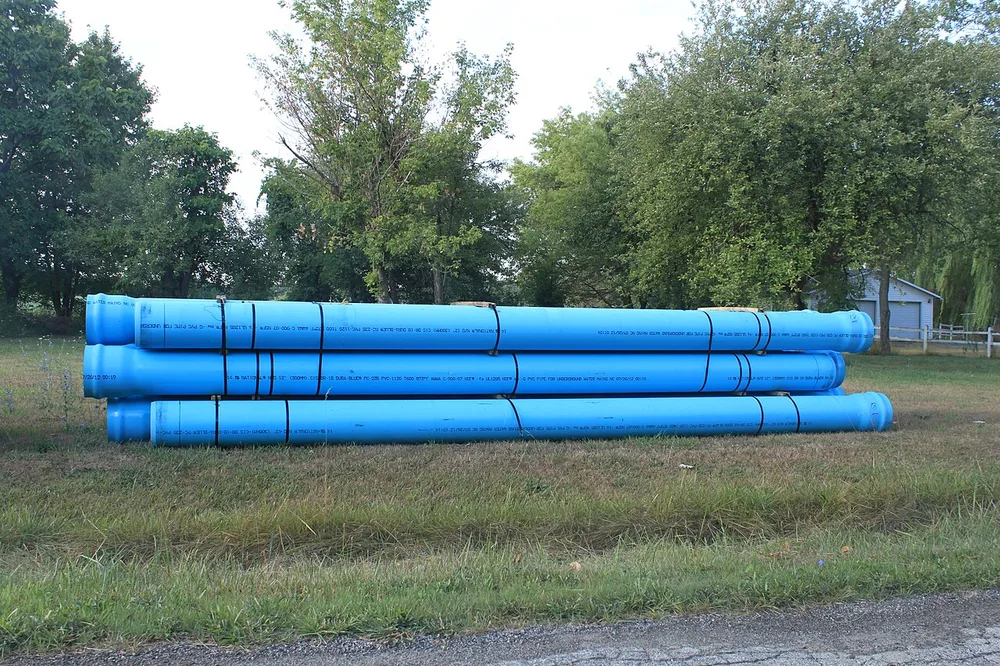
Typical uses: cold water supply, drainage, sewer lines, irrigation and underground water mains. Blue PVC pipe, as in the photo above, is a common colour code for potable water mains in some countries.
CPVC Pipe
What it is. CPVC is PVC that has been treated with extra chlorine. The change raises its heat resistance, so it can carry hot water as well as cold.
Strengths
- Handles hot and cold water, with a service temperature far above ordinary PVC.
- Good chemical resistance, so it is used in industrial and process lines.
- Used for fire sprinkler systems in many buildings.
- Does not corrode or scale like metal.
Limits
- More brittle than PVC or PP-R, so it needs careful handling.
- Higher cost than PVC.
- Needs the right solvent cement made for CPVC. Ordinary PVC cement is not suitable.
- Like PVC, it should be protected from long UV exposure.
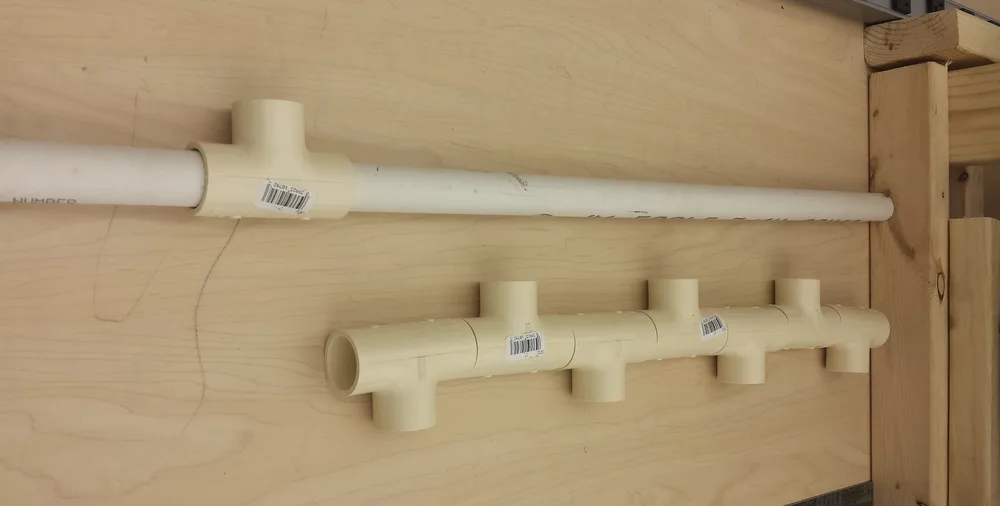
CPVC is usually cream, yellow or light grey, which makes it easy to tell from white PVC. In the photo, the cream fittings and white PVC pipe sit side by side.
uPVC Pipe
What it is. uPVC (also written PVC-U) is unplasticised PVC. It contains no softening additives, so the pipe is hard and rigid. Most of what people call "PVC pipe" for water and drainage is actually uPVC.
Strengths
- Strong and rigid, with a high pressure rating in the pressure grades.
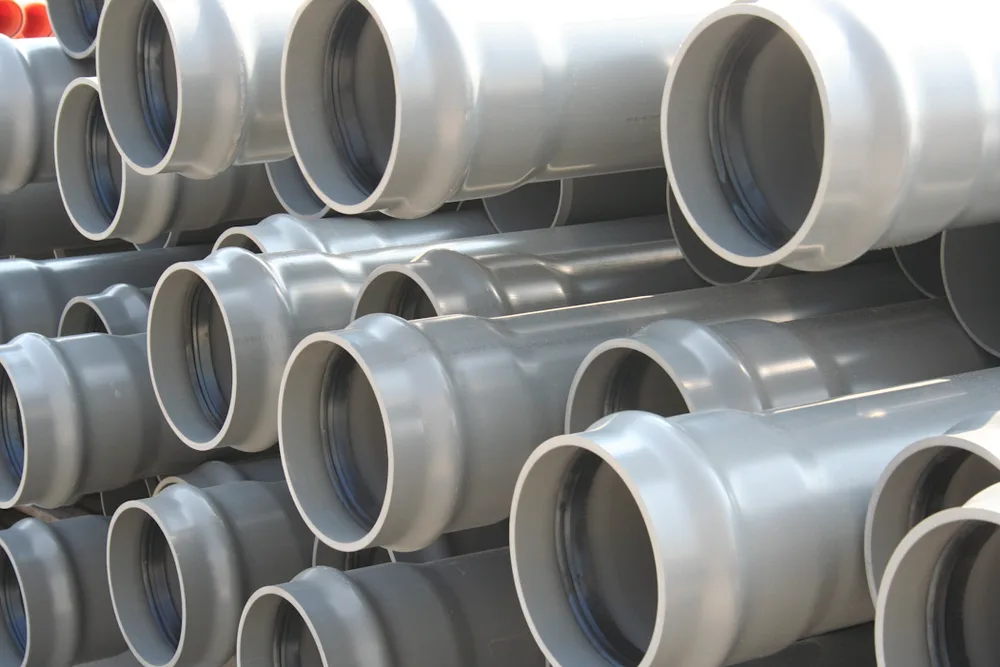
- Socket ends with rubber rings give fast, leak-tight joints on long runs, as seen in the photo.
- Does not rust, scale or corrode.
- Long service life and low maintenance.
Limits
- Cold water only. It is not suitable for hot water lines.
- Needs protection from direct sun if exposed.
- Not as flexible as PE, so it needs a stable trench bed and care around bends.
Typical uses: water supply, drainage and sewer pipes, irrigation mains, and electrical conduit. Wall-mounted drainage and rainwater downpipes are also commonly uPVC.
PP-R Pipe
What it is. PP-R is a polypropylene plastic used for building plumbing. It is the standard choice in many countries for both hot and cold water inside buildings.
Strengths
- Handles hot and cold water, with good long-term performance at elevated temperatures.
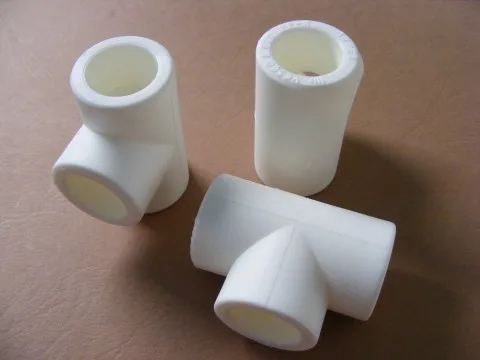
- Heat fusion joints. Pipe and fitting are melted together to form one continuous piece, so there is no glued seam to fail.
- Does not corrode, scale or react with drinking water.
- Smooth surface that resists build-up, and good insulation properties.
Limits
- Expands more than PVC when heated, so long hot runs need expansion loops or proper support.
- Needs a fusion welding machine and trained installers.
- Should be protected from long UV exposure unless the pipe is made with UV-resistant layers.
Typical uses: hot and cold water plumbing in villas, apartments, hotels and commercial buildings, plus solar and heating lines in suitable pressure grades.
HDPE Pipe
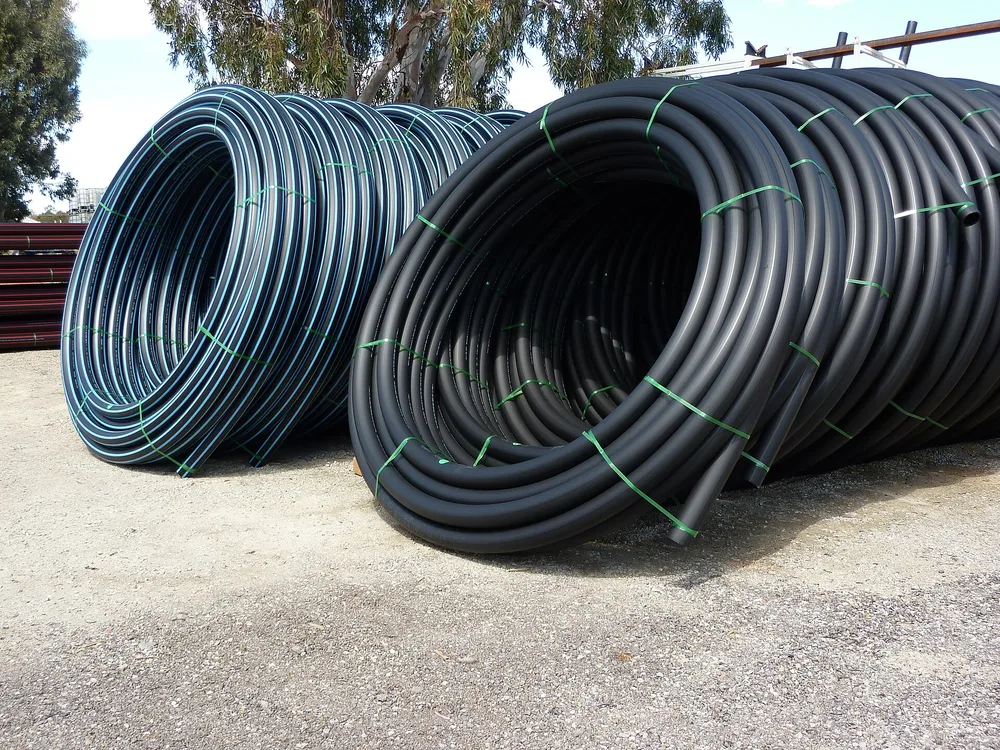
What it is. HDPE is high density polyethylene. It is a tough, flexible plastic that is supplied either in straight lengths or in long coils, which is why it is popular for long underground runs.
Strengths
- Flexible. It bends around obstacles and moves with the ground without cracking.
- Long lengths. Coils reduce the number of joints, which are the usual leak points.
- Fused joints. Butt fusion or electrofusion welding creates leak-free joints as strong as the pipe itself.
- UV resistant. Black HDPE contains carbon black and tolerates sun exposure much better than PVC.
- Excellent corrosion resistance, including to saltwater, so it is widely used for seawater intakes and outfalls.
Limits
- Not suited to hot water. Its pressure rating falls as the temperature rises.
- Fusion welding needs equipment and trained crews. Small compression fittings are available for smaller sizes.
- Higher cost than PVC for small domestic jobs.
Typical uses: potable water mains, irrigation and landscape lines, agricultural supply, industrial and seawater lines, drainage and cable ducting.
PVC vs CPVC vs uPVC: Quick Answers
- PVC vs uPVC. For water and drainage pipe, they are essentially the same hard, rigid material. "uPVC" simply states that no plasticiser has been added. Flexible PVC, which does contain plasticiser, is used for hoses and cable insulation, not for rigid pipe.
- PVC vs CPVC. CPVC has extra chlorine, which lets it handle hot water. PVC is for cold water only.
- PP-R vs CPVC. Both can carry hot water. PP-R joins by fusion and tolerates movement better. CPVC joins by solvent cement and is more rigid.
- PVC vs HDPE. PVC is rigid and joins quickly with cement or rubber rings. HDPE is flexible, UV resistant and fusion welded, which makes it better for long runs and difficult ground.
Which Pipe for Which Job?
| Job | Suitable pipe |
|---|---|
| Cold water supply inside a building | uPVC, PVC, PP-R |
| Hot water supply | PP-R, CPVC |
| Underground water main | uPVC, HDPE |
| Irrigation and landscaping | PVC, uPVC, HDPE |
| Drainage and sewer | uPVC |
| Seawater and desalination lines | HDPE |
| Fire sprinkler systems | CPVC (where approved) |
| Long runs over uneven ground | HDPE |
Choosing Pipes for a Water Tank Installation
A tank is only as good as the pipework attached to it. A few rules help avoid the most common problems:
- Match the pipe to the water. Cold supply and overflow lines can be uPVC or PVC. Anything carrying hot water, such as a line from a solar heater, needs PP-R or CPVC.
- Check the pressure rating. Pressure pipes are marked with a PN number (for example PN10 or PN16). Choose a rating above your working pressure, including pump surges.
- Protect from the sun. Pipes on a roof or beside a tank are exposed to UV and heat. Paint, wrap or shade PVC and PP-R, or use black HDPE where it is suitable.
- Support the pipework separately. Do not let pipe weight hang from the tank wall. See our guide to GRP water tank delivery and installation.
- Use flexible connectors at the tank. They absorb small movements and thermal expansion and protect the tank fitting.
- Use drinking-water approved pipe for potable supply, and confirm the approval mark on the product.
- Allow for expansion. Hot and warm runs in PP-R and long runs in HDPE move with temperature.
- Keep joints sound. Follow the pipe maker's instructions for cement curing time or fusion temperature and time.
Leaks usually start at fittings, not in the pipe. Our guide on how to repair a leaking water tank shows how to check connections.
Heat and Sun in the UAE
UAE conditions are hard on plastic pipe. Surface temperatures on a rooftop pipe in summer can far exceed the air temperature, which softens PVC, ages pipe faster and increases expansion. Practical steps:
- Bury pipes or run them in shaded ducts where possible.
- Paint exposed PVC with a light, UV-protective coat.
- Insulate or shade hot water lines.
- Do not install cold water lines in direct sun if you can avoid it, since they heat up and deliver warm water. Our guide on IBC tanks and heat covers the same effect on stored water.
Frequently Asked Questions
What is the difference between PVC and CPVC?
CPVC is PVC with extra chlorine, which allows it to carry hot water. PVC is for cold water only.
Is uPVC the same as PVC?
For rigid water and drain pipe, essentially yes. uPVC means unplasticised PVC. The "u" shows no plasticiser has been added, which is how rigid pipe is made.
What does UPC mean on a pipe?
UPC stands for Uniform Plumbing Code, a US plumbing standard. It is not a material. A UPC marking means the product meets that code.
What is PPP or PP-R pipe?
PP-R is polypropylene random copolymer pipe, used for hot and cold water plumbing in buildings. Joints are made by heat fusion.
Can PVC pipe be used for hot water?
No. PVC softens at higher temperatures and loses pressure rating. Use CPVC or PP-R for hot water.
Which pipe is best for underground water supply?
uPVC and HDPE are both widely used. HDPE is better for long runs and uneven ground because it is flexible and fusion welded.
Which pipe is best for a water tank connection?
Use a pressure-rated pipe that suits the water temperature, protect it from the sun, support it separately from the tank and fit a flexible connector at the tank wall.
Is HDPE pipe safe for drinking water?
HDPE made and approved for potable water is widely used for drinking water mains. Always check that the product carries the right approval.
Do plastic pipes last longer than metal pipes?
Plastic pipes do not rust or scale, so they can last for decades when installed correctly and protected from UV and heat. Joint quality and protection matter most.
Photo Credits
All photos are from Wikimedia Commons and used under the licences shown. The images have been resized, cropped or rotated, and the cover is a collage with labels added by Khazzan.ae. Adapted images are shared under the same licence as the original.
- PVC: "Dura-Blue PVC Pipe for Underground Water Mains" by Dwight Burdette, CC BY 3.0, source.
- CPVC: "CPVC tees" by Asadabbas, CC BY-SA 4.0, source.
- uPVC: "PVC pressure" by Стрелец Игорь, CC BY 3.0, source.
- PP-R: "Polypropylene PPR Pipe Tee" by Emilian Robert Vicol, CC BY 2.0, source.
- HDPE: "Acu-Tech HDPE Pipe Coils" by GordonJ86, CC BY-SA 4.0, source.


Related Resources
- GRP Water Tank Delivery and Installation in the UAE
- How to Repair a Leaking Water Tank
- How to Clean a Water Tank
- Water Storage Tanks UAE
- Underground Water Tanks UAE
📞 Call or WhatsApp: +971509583173 ✉️ Email: khazzanae@gmail.com 🌐 khazzan.ae 📍 Al Qouz Industrial Area 3, Dubai, UAE 🕐 Monday to Saturday, 8AM to 7PM